

Researchers advancing cancer care, diagnosis, and prevention through interdisciplinary and multi-institutional projects led collaboratively by The University of Texas at Austin and The University of Texas MD Anderson Cancer Center came together in Houston on April 9 and 10, 2026, to share insights and accelerate positive impact across the health care ecosystem. The fourth annual UT MD Anderson – UT Austin Collaborative Research Summit highlighted Texas’ leadership in cancer research and the values-driven culture of collaboration that propels innovation to save and transform lives.
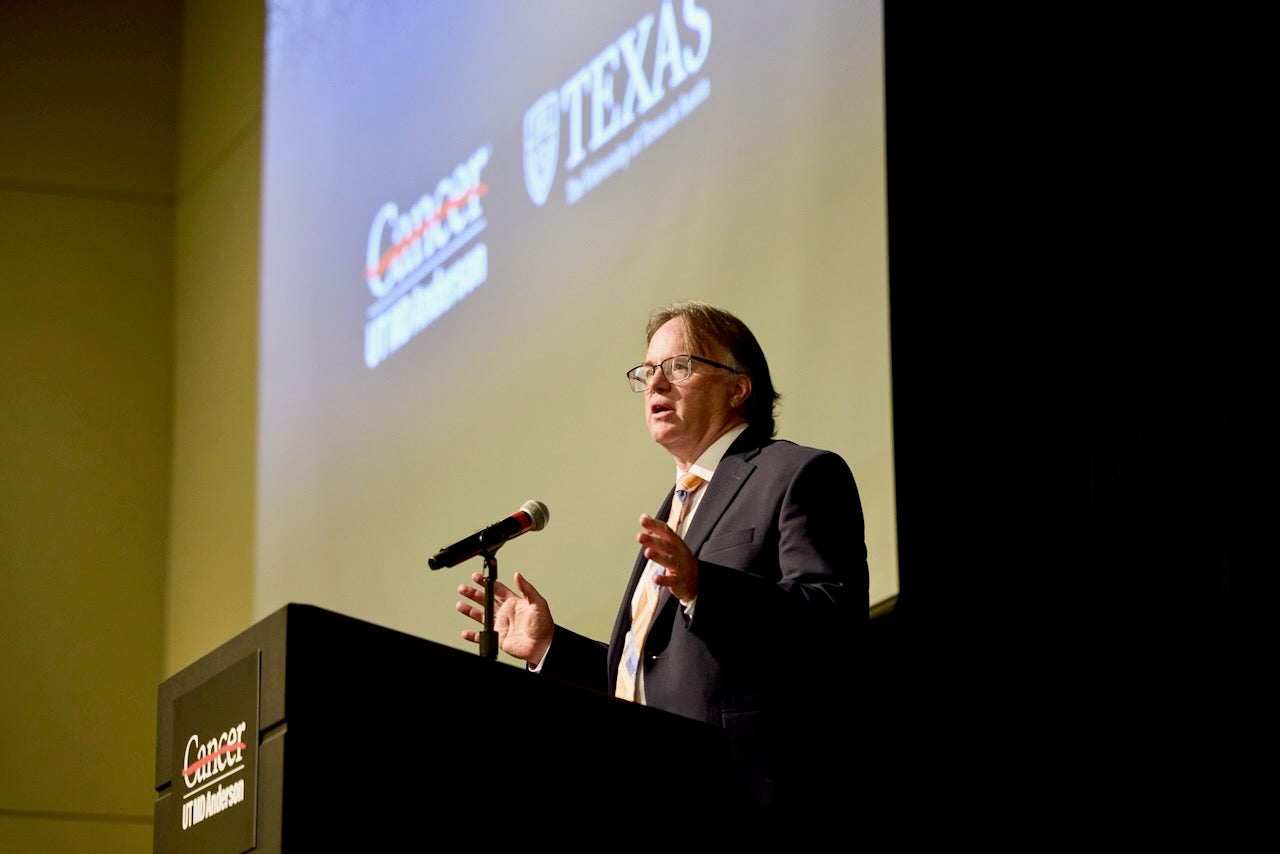
Keynote speaker David Lakey, M.D., Vice Chancellor for Health Affairs and Chief Medical Officer at UT System, shared UT’s strategic health and research priorities aimed at elevating the research environment across Texas and ensuring that UT provides the highest quality health care, education, and research. Some of these priorities include significant investments in nurses and nursing education, bringing in top talent from across the world, access to leading-edge equipment, technology — especially AI technologies — and trustworthy data, research in the areas of children’s mental health, brain health, space medicine, and more.
Throughout his talk, Dr. Lakey emphasized the importance of multi-institutional collaborations, like the one between UT Austin and UT MD Anderson, and how a commitment to partnership expands our resources and possibilities in service of Texans and our global community. This sentiment was echoed by Cancer Prevention and Research Institute (CPRIT) leaders Kristen Doyle, CEO, and Ruth Rechis, Ph.D., Chief Prevention Officer during their keynote panel on catalyzing the fight against cancer. Funded and supported by Texans and the Texas Legislature, CPRIT has partnered with more than 40 institutions in its 18-year history to help make Texas the second-largest funder of cancer research in the country. Jessica Calderon-Mora joined the panel to share progress on HPV prevention and screening across the state, made possible through CPRIT’s grant program. Hers is just one example of how collaborative cancer research leads to new practices and improved outcomes for patients.
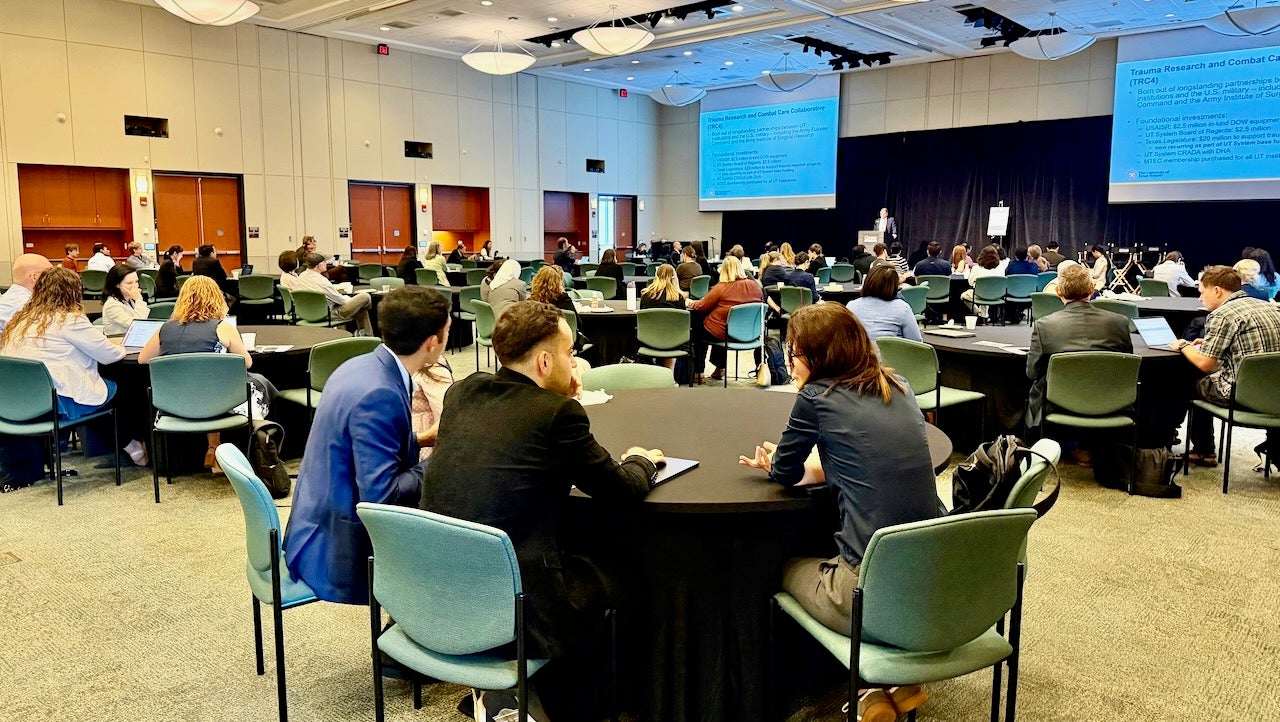
At UT Austin and UT MD Anderson — two of Texas’ and the nation’s leading research institutions — more than 60 researchers, spanning experts in complex surgeries, patient care and outreach, and medical data analysis, to leaders in robotics, machine learning, and more are working together to drive stakeholder-centered research projects that address pressing needs and improve how we prevent, detect, and treat difficult and life-threatening forms of cancer. These 5-year projects are part of the Collaborative Accelerator for Transformative Research Endeavors and are designed to facilitate interdisciplinary research that leads to groundbreaking discoveries and translates into practice across the medical field and in our communities. During the symposium, researchers leading each project presented their first-year learnings on:
- Investigating the role of microplastics in cancer
- Presented by Andrea Viale, M.D., on behalf of the Environmental Microplastics and systemic PATHology, Inflammation and Carcinogenesis project team
- Targeting Cuproptosis in therapy resistance
- Presented by Boyi Gan, M.D., on behalf of the Studying and Targeting Metal Response in Tumor Radioresistance project team
- Integrating biological insights with therapeutic innovation
- Presented by Bisrat Debeb, D.V.M, Ph.D., on behalf of the Translating Research Insights at UT Austin and MD Anderson into Progress & Hope for Inflammatory Breast Cancer project team
- Technologies to advance image-guided orthopedic surgery
- Presented by Justin E. Bird, M.D., on behalf of the Image-Guided, Robot-Assisted, Biomechanically-Informed Osteotomy and Surgical Implants for Orthopaedic Oncology project team
- Purposeful repurposing, characterization, and matching for genomically target-negative cancers
- Presented by Jeanne Kowalski-Muegge, M.D., on behalf of the Precision Oncology Decision Support – Protein AI Companion Knowledge project team
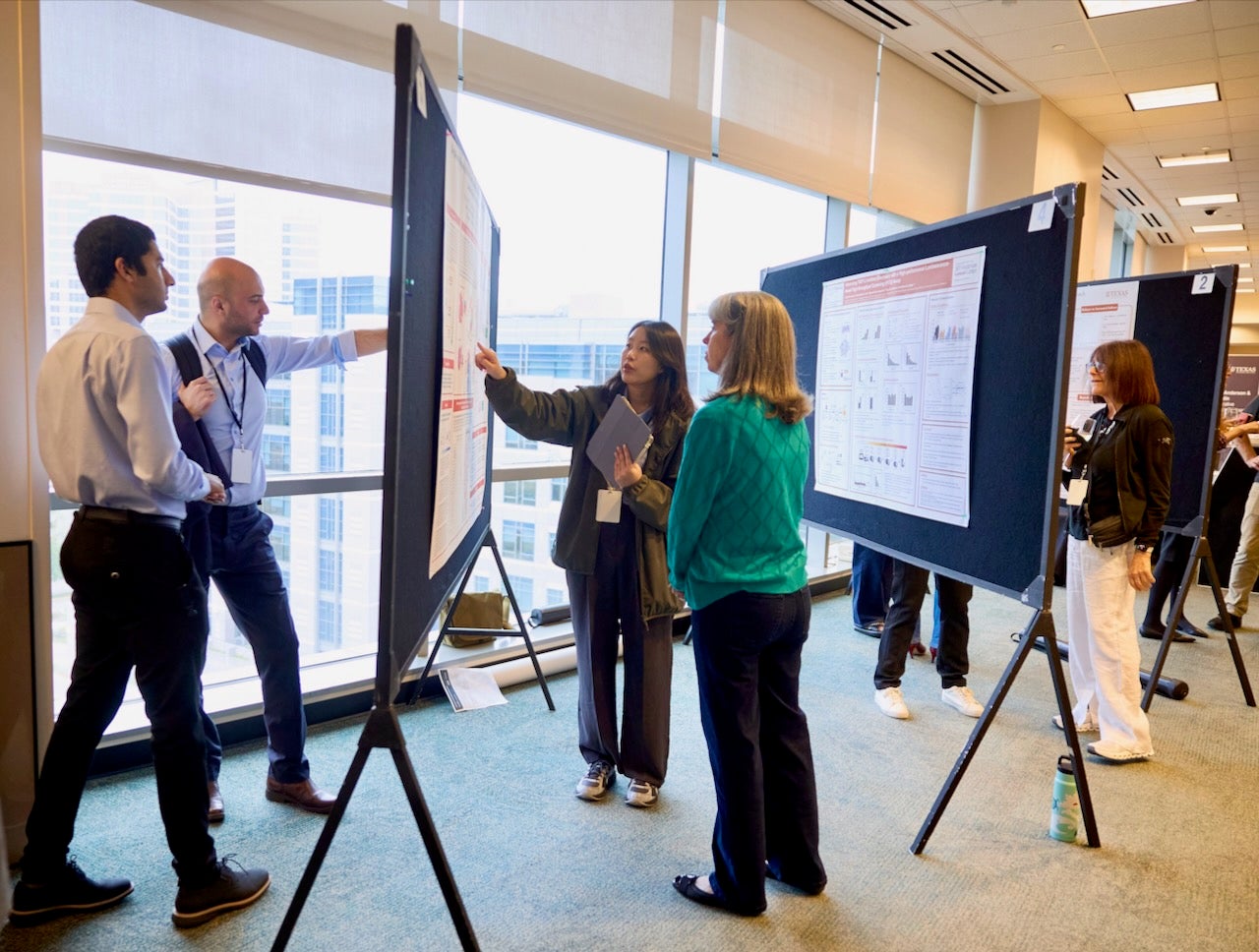
Additional program highlights included opening remarks from UT Austin Interim Vice President for Research Fernanda L. Leite, Ph.D., P.E., F.ASCE; breakout discussions focused on population health, computational methods for oncology, and modulating the immune system; dynamic poster presentations exploring cutting-edge research on topics from community-embedded cancer screening education to genetic sequencing and AI-enabled medical tools; and a networking reception that convened conversations centered around capacity-building, knowledge-sharing, and building continued collaborations in service of the public.