

Research Spotlight on: Image-Guided, Robot-Assisted, Biomechanically-Informed Orthopaedic Cancer Surgery (IG-RABIT)
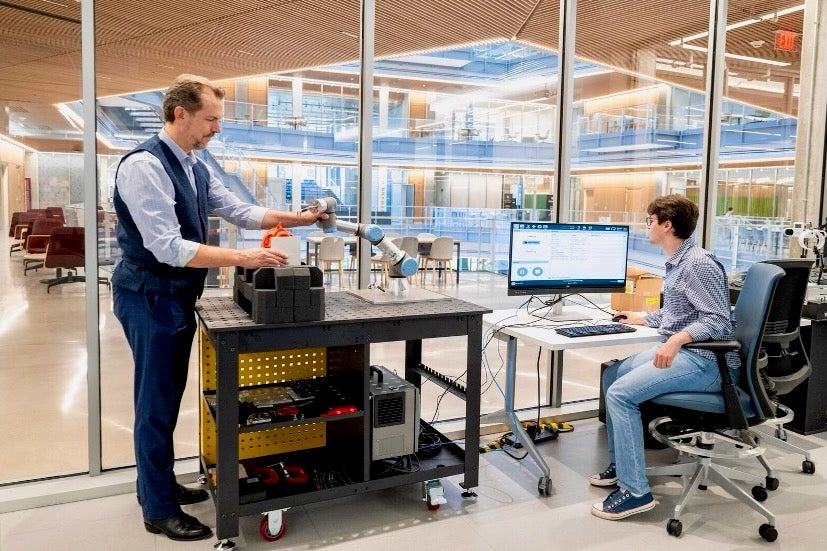
A team comprised of experts in robotics, imaging, biomaterials, and orthopaedic surgical oncology is working to transform the way the medical field approaches complex surgeries to improve the lives of cancer patients. Collaborators at The University of Texas at Austin and The University of Texas MD Anderson Cancer Center started working together in 2025 to develop new technologies and processes that could improve long-term outcomes for patients with pelvic and spinal tumors. The work is supported by a competitive research grant from the Collaborative Accelerator for Transformative Research Endeavors. Over the course of five years, the research teams will bring their distinct perspectives and dynamic experiences in lab and hospital environments together to lead cutting-edge research and put it into practice.
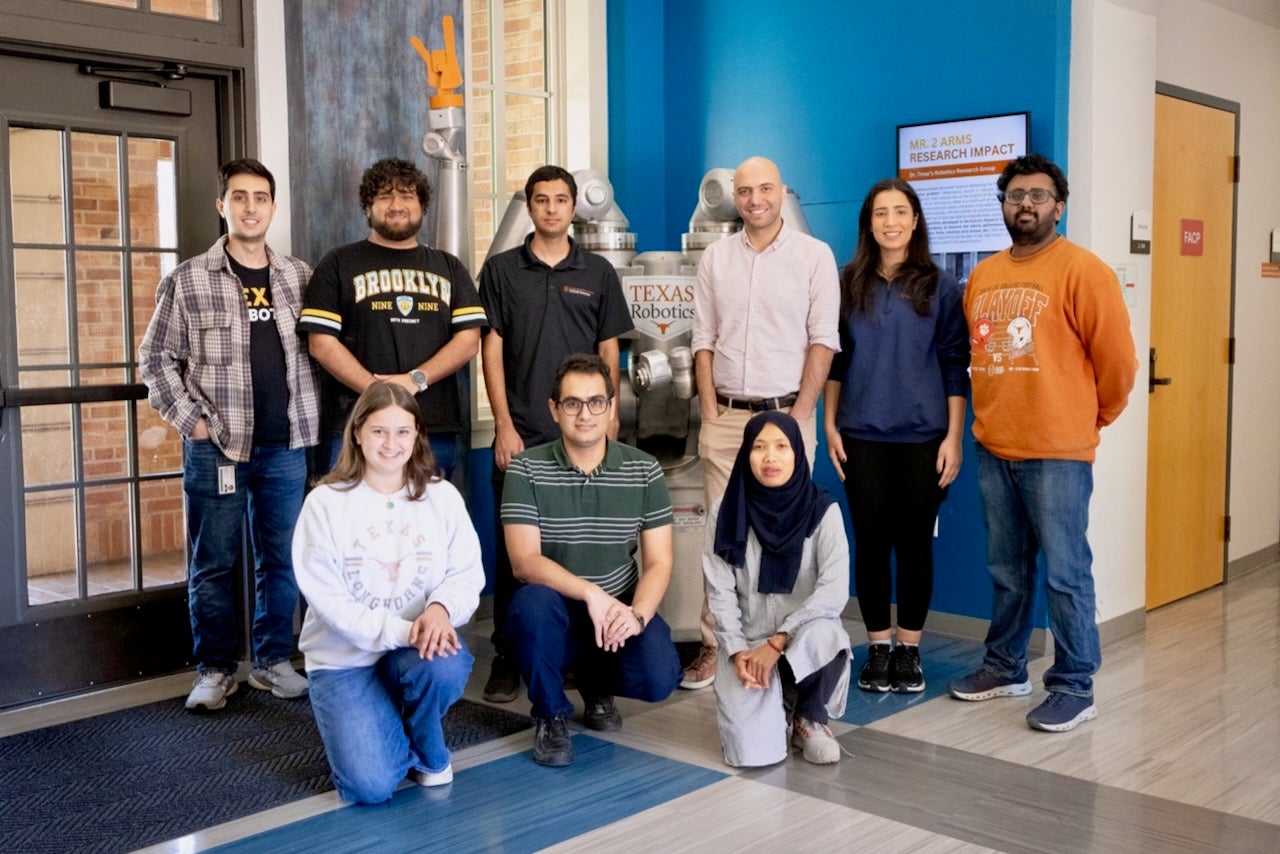
The complex anatomy of the lumbar spine, sacrum, and pelvis, including nuanced curvature and major adjacent nerves and soft tissues, makes tumor resections and reconstructions in this part of the body difficult for even the most skilled surgeons to navigate. It’s not uncommon for surgeries to last more than 12 hours — or even span multiple days — and there are high levels of uncertainty in the quality of patient outcomes. This is why researchers leading the Image-Guided, Robot-Assisted, Biomechanically-Informed Osteotomy and Surgical Implants for Orthopaedic Oncology (IG-RABIT) team are determined to find better solutions for patients and doctors alike. The project team, which includes five researchers from UT MD Anderson and eight from UT Austin, outlined four primary goals for their project:
- Develop computational models for accurate, automated surgical planning of spinal and pelvic cancer surgeries before the operation.
- Design personalized reconstructive implants using patient-specific biomaterials that support better healing, movement, and long-term quality of life for the patient.
- Equip surgeons with cutting-edge imaging and robotic assistance for greater precision during difficult spine and pelvic tumor procedures.
- Test and integrate these tools in preclinical studies to ensure they can effectively translate to real-world patient care.
At its core, IG-RABIT is asking a bold question with wide-ranging applications:
How can we design cancer surgery not just to remove tumors, but to improve long-term outcomes for patients and empower experts to perform at their best?
Dr. Jeffrey Siewerdsen, professor of Imaging Physics at UT MD Anderson and principal investigator for the project, explains how the project goals support a bigger picture. "Each of the IG-RABIT technologies — imaging, robotics, and implants — offers major impact," he says. "In the Surgineering Lab, we will evaluate each technology and pull them all together in an integrated, streamlined system that optimizes workflow." Siewerdsen added that new technologies can hit major barriers if they do not recognize the complex workflow in which they must be smoothly integrated. "We’re getting ahead of that by modeling workflow and system integration at the earliest possible stage of the research," he says.
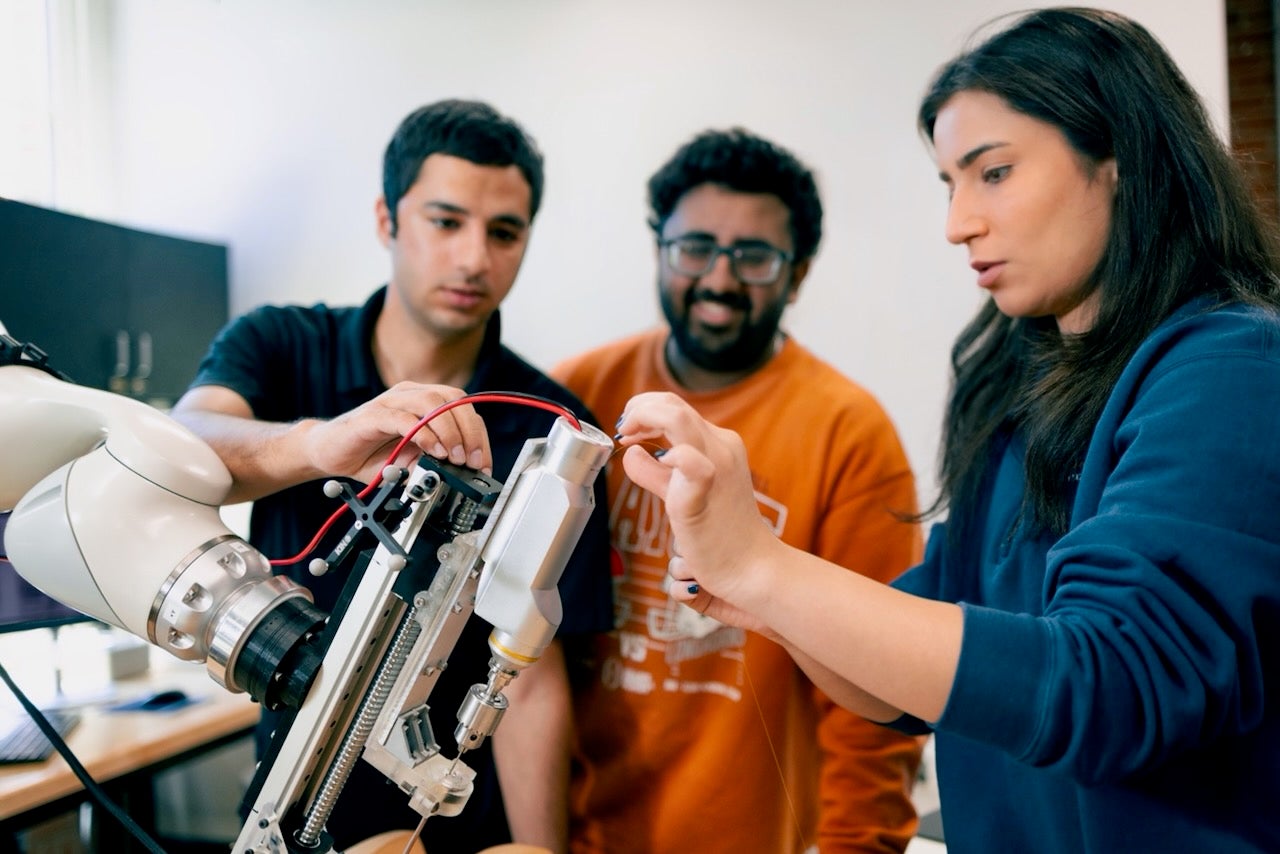
Surgical robotics expert Dr. Farshid Alambeigi, associate professor of Mechanical Engineering at UT Austin, leads another effort on the project. He described how the IG-RABIT research team is applying design thinking principles to advance a patient-centered approach that is also responsive to the clinical needs. "Sometimes by adding an implant to the body, you are changing the gait pattern and way patients are walking if you haven’t considered the biomechanical aspect when you are doing the surgery," Alambeigi says. "So, with IG-RABIT, we are using the CT scans and X-rays before the surgery and simulating the procedure and outcomes for the patient six months or a year after surgery, determining which procedure would be perfect for the patient, and then designing it backwards."
How is that different from current approaches to cancer surgery? "Right now, most of the procedures and technologies developed are mainly focused on the surgeon to make sure that they can execute what they have in their mind," Alambeigi shares. "But what we are proposing is — what if we had a better approach? If we make sure that, biomechanically, this is the best for the patient and then come back to the clinician to have their expertise on what will work best for the procedure itself?"
From the beginning, the IG-RABIT team knew that they wanted to embrace a stakeholder-centered approach that takes the full process of treating a patient into account. "What that means," Alambeigi explains, "is that we not only want to help the clinicians to very accurately execute what they plan before the surgery, but we want to look ahead and prognostically see if we can also help the patient after the procedure to ensure they have good long-term outcomes in the way that they move about their life."
This interdisciplinary, stakeholder-centered approach is unique — and it is possible because of the complementary strengths of UT Austin and UT MD Anderson.
From the lab to the hospital, the IG-RABIT team is innovating by bringing experts together across top institutions.
Interdisciplinary and multi-institutional collaboration are key drivers of the research accelerator program and the IG-RABIT project. UT MD Anderson brings to the collaboration deep clinical and laboratory expertise, access to real patient cases, a huge volume of cancer surgery data, and extensive experience treating some of the world’s most complex cancers. UT Austin contributes expertise in robotics, bone biology, biomechanics, materials science, computer science, and engineering — fields essential for designing the next generation of surgical technologies.
Together, the institutions form a truly interdisciplinary team that is well-positioned to lead stakeholder-centered innovation from the lab to pre-clinical settings to real-world practice. Each expert brings a different lens so that the team can see the full picture of patient and clinician needs, develop novel robots and implant materials, and design seamless systems to improve quality at scale.
"We have a great combination of strengths," Siewerdsen says. "We couldn’t tackle this project without both institutions."
Some early examples of needs the team is tackling together include training artificial intelligence tools to reliably and accurately analyze specific medical image data to semi-automate surgical planning and designing robots to carry out precise surgical cuts on a curved path. These technologies are being developed within the IG-RABIT effort led by Dr. Justin Bird, professor in the Department of Orthopaedic Oncology and Division of Surgery Innovation Safety Officer at UT MD Anderson, using UT MD Anderson’s vast data sets and depth of expertise in image analysis.
"AI technologies are well posed to handle surgical planning, except they may not perform well with abnormal anatomy with large tumors," Siewerdsen says. "Afterall, most AI algorithms would never have seen those things in training, so we need to retrain the tools to reliably segment the pelvis, sacrum, spine, and tumor in a cancer surgery context. Then, based on those segmentations we can determine cut planes and device trajectories."
Once the surgical plan is refined and a cut path is approved by a surgeon, a robot could then assist with precise execution. Alambeigi is developing robots that can drill along a curved path, adapting to the shape of patients’ specific bones and tumors. "Surgical robots are becoming more and more prevalent," Siewerdsen says. "But for the most part, they simply find and hold a stable position and path for the surgeon to follow. In IG-RABIT, we are outfitting the robot to also do the complex drilling and cutting to achieve really precise placement."
Siewerdsen emphasizes that the surgeons will remain the experts and decision-makers, but that advancements in robotics will help systematize the absolute highest quality of care. "Like many AI tools in medicine, it does not replace the clinician; it just helps them do their job better, every time."
These innovations already show potential to catalyze change, and the IG-RABIT team is committed to ensuring this work moves beyond the lab and is poised for large-scale adoption in practice.
"We want to make sure these technologies that we are developing can actually make positive changes,” Alambeigi says. “At the end of the day, we want to make sure what we develop is really helping and that we can see these technologies working in real life for patients and clinicians."
By working hand-in-hand with clinicians at the world’s leading cancer center, this type of research translation and technology adoption becomes a central focus.
A model for transformative impact starts with helping one person, improving one life at a time.
While IG-RABIT is focused on orthopaedic oncology, its impact extends far beyond a single disease or procedure.
The tools, insights, and collaborative framework emerging from this project lay the foundation for safer, more personalized cancer care that considers the full picture of what works best for the patient and doctor while creating a trustworthy system of technologies that can grow better practices and health outcomes at scale.
"This work starts to systematize this very complex set of surgeries in a way that is more rigorous and more reproducible, which enhances quality," Siewerdsen says.
Siewerdsen shares what motivates him to pursue this work with passion: "What drives most of my work is working so closely with great clinicians. The right way to develop technologies is to be close enough to the clinicians that unarticulated needs that would bring major positive impact become clear," he says. "Engineering a solution is sometimes the easy part compared to genuinely understanding the clinical problem and the full context and workflow within which a solution must be integrated."
And getting to the real problem, to the root, is just what the team is doing through its stakeholder-centered approach.
While the research team works toward systems change, they are transforming the lives of individual cancer patients. Every surgery and reconstructive implant that helps someone matters. That, as Alambeigi points out, is the heart of the work.
Alambeigi described an experience in an early project meeting that motivates him to help conduct this research. He recalls a UT MD Anderson colleague showing him a video of a young boy who had a very long, dangerous, and complicated surgery to remove cancer. He asked what happened after the surgery and was shown a video of the recovered patient powerlifting. It resonated deeply that thoughtful advances in physician-led, robot-assisted medical procedures can truly change a life.
"If we can even help just one patient have a better life, that is real impact," Alambeigi says. "Helping patients and clinicians has a deep meaning for me and it makes this work even more challenging. It’s challenging and at the same time it’s exciting."
In the years ahead, the team looks forward to continuing a strong collaboration, working together on technology, materials, and planning advancements that are both life-changing and field-changing. “To have a group of people to work with that aren’t just going through the motions of the research, that are thinking about this kind of impact for both patients and clinicians, makes this project different and I’m learning from my colleagues every day,” Alambeigi says.
IG-RABIT has set out to illustrate what’s possible when experts across disciplines and institutions align around a shared purpose: improving lives through science that serves society.
Learn more about the project team here and follow UT Austin Research on LinkedIn for the latest project updates.