

Metal Intervention Network and Therapy Program (MINT): Studying and Targeting Metal Response in Tumor Radioresistance
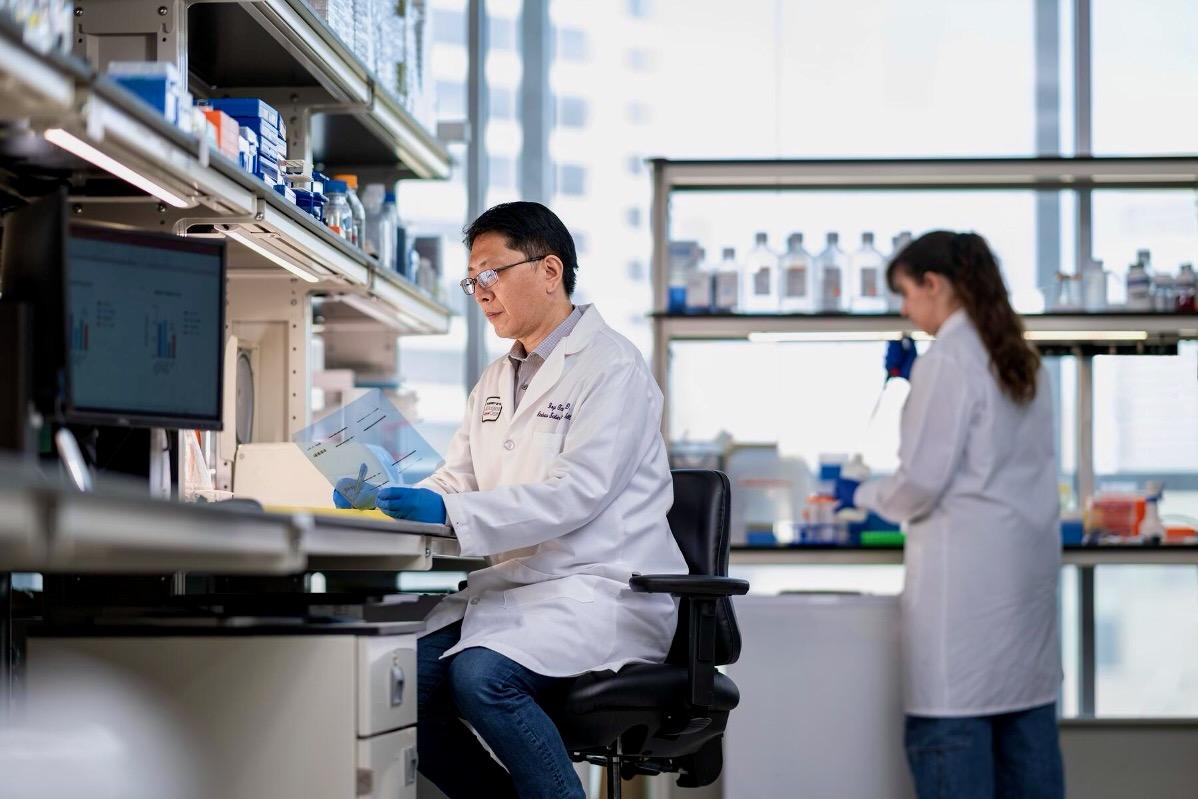
About half of all cancer patients receive radiation, but in many cases, the tumor stops responding to treatment and the cancer returns. A research team comprised of experts from The University of Texas at Austin and The University of Texas MD Anderson Cancer Center is studying how cancer cells regulate copper during radiation therapy and how these changes contribute to treatment resistance, aiming to develop more effective ways to improve cancer treatment outcomes.
This research project, called Metal Intervention Network and Therapy Program: Studying and Targeting Metal Response in Tumor Radioresistance, or MINT, is part of the Collaborative Accelerator for Transformative Research Endeavors (Accelerator), launched by UT Austin and UT MD Anderson in 2025 to support cross-institutional research that builds on the strengths of these two leading institutions and increases capacity for discovery, testing and technological development that leads to positive changes for patients, clinicians, researchers and health care systems.
By understanding how essential metal ions—particularly copper and iron—shape the response of cancer cells to therapy, the MINT team, which includes experts in radiation oncology, cancer biology, cancer systems imaging, chemistry and more, aims to uncover the biological pathways that determine whether tumors respond to radiation therapy or become resistant to it. Their process begins by advancing fundamental science that could also lead to helpful applications for a wide range of diseases from cancer to neurodegenerative diseases such as Alzheimer’s and Parkinson’s.
Dr. Yi Lu, a professor of chemistry at UT Austin who has spent his career studying the role of metal ions in human health and a co-principal investigator on the Accelerator team, said for many years, cancer research has focused on DNA, RNA and proteins, and much progress has been made in discovering biomarkers based on them.
"We all know that metal ions play important roles, but they have not been well-studied, and we want to fill this gap in our knowledge of metal ions…," Lu said. "Our goal is to try to elucidate the role of metal ions in general, particularly copper and iron, in cancer research and radiotherapy."
Dr. Boyi Gan, a distinguished professor of experimental radiation oncology at UT MD Anderson, is an expert in cancer metabolism and regulated cell death and principal investigator on the Accelerator team.
"We’re trying to understand how metal biology influences the way cancer cells respond to radiation therapy so we can develop new treatments to overcome radioresistance,” Gan said. “Our goal is to connect fundamental scientific discovery with patient care. We study how cancer cells respond to the stress of radiation treatment, identify new therapeutic strategies based on those discoveries, and then work to advance the most promising approaches through preclinical studies and ultimately into clinical trials."
The MINT team will leverage the deep expertise in chemistry and biology at UT Austin and pre-clinical and clinical expertise and resources at UT MD Anderson to quickly advance understanding, test hypotheses and refine new drugs.
Combatting Radioresistance to Improve Cancer Treatments
Why does resistance to radiation therapy occur?
How do metal levels respond to therapeutic stress?
How does copper trigger cell death?
How can we leverage our understanding of metal biology to help cancer patients overcome radioresistance?
These are some of the key questions driving the MINT research project.
"Radiation therapy is highly effective for many patients, but some tumors either fail to respond from the beginning or become resistant over time.” Gan says. “Understanding why that happens is one of the biggest challenges in radiation oncology."
Radioresistance prevents radiation therapy (RT) from being effective. It can be intrinsic or acquired after initial exposure to RT and often leads to a recurrence of cancer. This is significant because about half of all cancer patients, including those with thoracic (lung and esophageal) cancers, currently receive RT as part of their treatment. Understanding the connection between metal ions and radioresistance could be key to saving lives and reducing the chances of cancer recurrence.
"For many years cancer researchers have been focused on finding drugs to kill the cancer," Lu shares. "Unfortunately, these drugs not only kill cancer cells but also damage healthy cells. Therefore, there have been side effects that cause major issues."
Patients can also develop a resistance to therapies like chemotherapy, radiotherapy and immunotherapy, sometimes very soon after receiving them, Lu explained. "This is very frustrating for cancer patients and their loved ones," Lu said.
Both Gan and Lu emphasize that their team is highly motivated to make a positive difference for cancer patients.
"For patients, we are going to develop more effective, more selective drugs that can kill not only regular cancer but the cancer cells that are resistant to therapy, and do so more safely with minimal side effects," Lu says.
Beyond developing these therapies, the team also plans to create tools for investigating how cancer cells evade therapies.
Early Developments Improve Metal Ion Measurement and Mapping to Accelerate Discovery
Through their collaborative research project, "Deciphering Iron Redox during Ferroptosis in Cancer Biology," which received a pilot award from UT Austin and UT MD Anderson in 2024, researchers on the MINT team are equipped with an initial understanding of how iron impacts the effectiveness of RT. They are now focused on how copper influences tumor resistance to radiation therapy. The team is looking closely at cuproptosis — a form of regulated cell death triggered by copper overload.
"Recently, Dr. Gan has pioneered research into cuproptosis. Many therapy-resistant cancer cells appear to remain vulnerable to cuproptosis, making it a promising new therapeutic strategy. It’s a promising and complementary approach to killing cancer cells," Lu said.
While iron-induced and copper-induced cancer cell death are still in early, pre-clinical stages of development at UT MD Anderson, Dr. Lu's lab at UT Austin is developing imaging tools that can distinguish between two chemically different forms of copper inside living cells in real time.
"Until very recently we did not have the right tools to visualize two copper states," Gan said. "Dr. Lu's lab developed these very novel tools, chemical tools – so-called 'Copper I' and 'Copper II' sensors – so that we can now simultaneously visualize these two different states of copper in the cells, in real time."
Gan and fellow researchers at UT MD Anderson are using these advanced imaging tools to measure copper levels in the cell. Robust measurement techniques can be used to adjust treatments for each patient. This initial understanding will inform the team’s approach as the project progresses.
"This is very important to help my lab design a therapeutic strategy to overcome radioresistance that we can test in preclinical models," Gan said. "From there, we will collaborate with thoracic radiation oncologist Dr. Steven Lin and evaluate the most promising strategies in patient-derived samples and, ultimately, clinical trials."
Another foundational element of the MINT team's research approach is the development of a first-of-its-kind spatial map of metal ions in the body that can be layered with other biological data to provide an accurate picture of the effects of metal-based therapies on the body. This map will show where different forms of metal ions are located within tissues, helping researchers understand how metal level changes during disease and treatment. Together, the map and measurement tools will allow for informed iteration, testing, and evaluation to create precisely targeted cancer treatments that kill cancer cells while preserving normal cells.
Wide-ranging Applications Inspire Hope
"Iron and copper are essential for human health, but in very, very subtle balances," Lu says. "Too much of these metal ions can also result in many types of diseases, for example Alzheimer’s disease."
Copper and iron are essential for normal biology, but their levels must be carefully controlled. Abnormal metal regulation has been linked not only to cancer but also to neurodegenerative diseases such as Alzheimer's and Parkinson's disease. Tools developed through MINT may therefore have applications beyond cancer research.
To help clinicians with a targeted approach to treatment that leads to better outcomes for patients, the MINT team is developing a spatial map of these metal ions to advance a more comprehensive understanding of human biology.
"We're developing fundamental tools that can be applied to neurodegenerative diseases, not just cancer," Lu explains, emphasizing the team's commitment to advancing general as well as specific scientific knowledge.
Looking ahead, the team is working toward collecting human patient samples to test whether their findings can be confirmed. The collaboration between institutions enables the team to accelerate their research by testing their hypotheses and novel metal-based therapies on real tissue samples at UT MD Anderson, the world's leader in cancer care, and taking them to the lab at UT Austin, equipped with cutting-edge measurement and tools, to study, adjust and refine. Soon, they will start a clinical trial that applies the refined tools back to the preclinical samples in the Gan lab and then to clinical samples in the Lin lab.
"We have a dream team," Lu said, "We can go back and forth between the fundamental science, preclinical studies, and clinical studies to really collaborate and test our hypotheses."
Gan echoes the sentiment and hopes the team can serve as a model for more multi-institutional collaborations that address big, complex questions.
"Neither of us can do this alone," he says of the UT Austin and UT MD Anderson collaboration. "Cancer is an incredibly complex disease, and no single field or institution can solve it alone. We really need collaboration. By combining expertise in chemistry, cancer biology, imaging technology, and clinical oncology, the MINT team hopes to accelerate discoveries that would be difficult for any single institution or discipline to achieve alone."
You can learn more about the full project team and their collaborative, interdisciplinary approach to transformational cancer research here.
Additional Resources
Learn about copper-induced cell death, or cuproptosis, in the UT MD Anderson story, "Agents that cause ‘copper overload’ can overcome radiotherapy resistance in preclinical models," and "Copper-induced cell death activates immune system, may help overcome immunotherapy resistance."
Read recent papers authored by the research team in Cancer Cell, "Radiotherapy promotes cuproptosis and synergizes with cuproptosis inducers to overcome tumor resistance," and Cell, "Cuproptosis-immunity crosstalk informs strategy to overcome immunotherapy resistance."
Read a story from Drug Discovery News featuring the team's work on radiation resistance and emerging therapeutic strategies, "How an enzyme helps lung cancer survive radiation, and how to stop it."
Learn more about Dr. Yi Lu's work on DNAzyme-based metal sensors and metallomics technologies to understand iron in ferroptosis and copper in cuproptosis.