

Nine University of Texas Austin faculty members representing a variety of disciplines, colleges and schools have been selected as recipients of the 2025-2026 Research & Creative Grants.
The grants program, which is administered by the Office of the Vice President for Research, Scholarship and Creative Endeavors, supports projects of individual tenured and tenure-track faculty members.
The program supports research, outreach and creative activities in all disciplines to foster publications, patents, recognition, awards or exhibitions/performances and/or improved competitiveness for external funding.
This year’s awardees, who will each receive up to $10,000 in support of their projects, are:
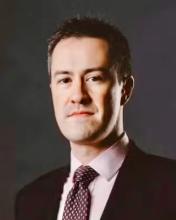
Andrew A. Brownell, Assistant Professor, Butler School of Music, College of Fine Arts
Recording the Keyboard Sonatas of Johann Samuel Schroeter
The six keyboard sonatas, Opus 1, of Johann Samuel Schroeter (1753-88) will be recorded on a piano from 1791 to advance the reconsideration of canon in the field of classical music and bring attention to an almost entirely forgotten musician who contributed to the popularity of the piano in its infancy.

Rosemary Candelario, Associate Professor, Theatre and Dance, College of Fine Arts
Butoh Ecologies: Dancing with Nature as Embodied Ecological Praxis
In the context of climate change, this project focuses on international training programs of the Japanese avant-garde movement form, butoh, as sites of embodied ecological practices and draws on participant observation, interviews and archival research conducted in Australia, Japan, Europe, and North America.
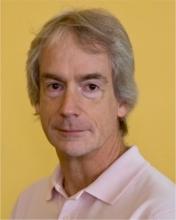
James E. Gardner, Professor, Earth and Planetary Sciences, Jackson School of Geosciences
Pyromorphite-Hosted Rare Earth Element Enrichment at Bunker Hill Mine, Idaho
This project will advance research on pyromorphite, which immobilizes rare earth elements and could represent a potential revenue stream that intersects with national security interests connected to the domestic supply of critical minerals.

Benjamin Gregg, Professor, Government, College of Liberal Arts
Between Science-Based Medicine and Traditional Healing: Bioethical Analysis of Competing Health Paradigms in the Maluku Archipelago of Indonesia
This research examines how bioethical principles are interpreted in the Maluku Islands of Indonesia, where Western bioethics meets deeply rooted local traditions. It focuses on physicians trained in science-based medicine serving isolated island communities whose healthcare draws on cultural and spiritual frameworks.
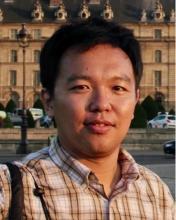
Qixing Huang, Associate Professor, Computer Science, College of Natural Sciences
Joint Pose and Representation Optimization for 3D Generative Modeling
The goal of this project is to explore synergies between 3D deep learning in graphics/3D vision computational chemistry, and structural biology by developing a new class of neural representations using tools in computer graphics to significantly advance the state-of-the-art in scientific domains.
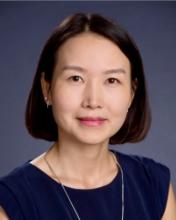
Hyeon-Ah Kang, Associate Professor, Educational Psychology, College of Education
Dynamic Latent Modeling of Student Interaction Data from AI Learning Platforms
This project aims to develop a new approach for analyzing student interaction data from AI-powered learning platforms by building a flexible model that can better capture the complexity of student behaviors and learning activities and create a statistical tool that allows researchers to draw meaningful insights about learning processes.

John C. Lassiter, Professor, Earth and Planetary Sciences, Jackson School of Geosciences
Constraining the Growth of Continental Crust using the K-Ca Radiogenic Isotope System
This research study will analyze calcium isotope variations in ancient felsic rocks from the Wyoming Craton (3.45–2.85 billion years old) to determine whether they represent new crust formed from mantle melting or recycled older crust. Results will provide insights into early continental crust formation and its role in Earth’s climate and biosphere.
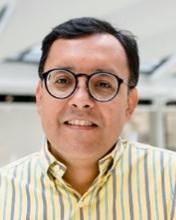
Navid Saleh, Professor, Maseeh Department of Civil, Architectural and Environment Engineering, Cockrell School of Engineering
Empathic Design of Novel Non-Potable Water Treatment.
This project aims to collect proof-of-concept data for inorganic and parasitic pollutant removal from water used in non-potable purposes and will leverage an already established (Navajo) community relationship and technical expertise.
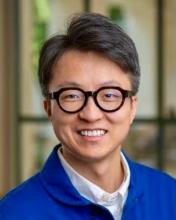
Liang Wang, Assistant Professor, School of Architecture
Superblock: A Typological Atlas
This ongoing research project investigates the history, development and contemporary potential of the superblock as a central yet underexamined urban typology. Through original drawings, archival research, and analytical writing, the project reconstructs the evolution of the superblock across cultures and geographies, while reframing it as an instrumental design tool to address the challenges of density, housing, and ecological resilience in contemporary cities.