


Plastics are everywhere. They are in our food packaging and kitchen tools, the clothes we wear, the air in our homes and workplaces, and in our watersheds and oceans. Although large-scale plastic production began less than a century ago, they have become one of the most pervasive materials on the planet, persisting long after their intended use, breaking down and scattering into ever smaller fragments that may never truly go away.
Since 2022, scientists have detected these microscopic plastic particles in human blood, lungs, and even placentas, linking them to inflammatory and degenerative diseases such as cancer. But here is still a lot to learn. The question that remains largely unanswered, and what makes this moment in science and medicine so critical, is: what does microplastics pollution mean for our health and what can be done about it?
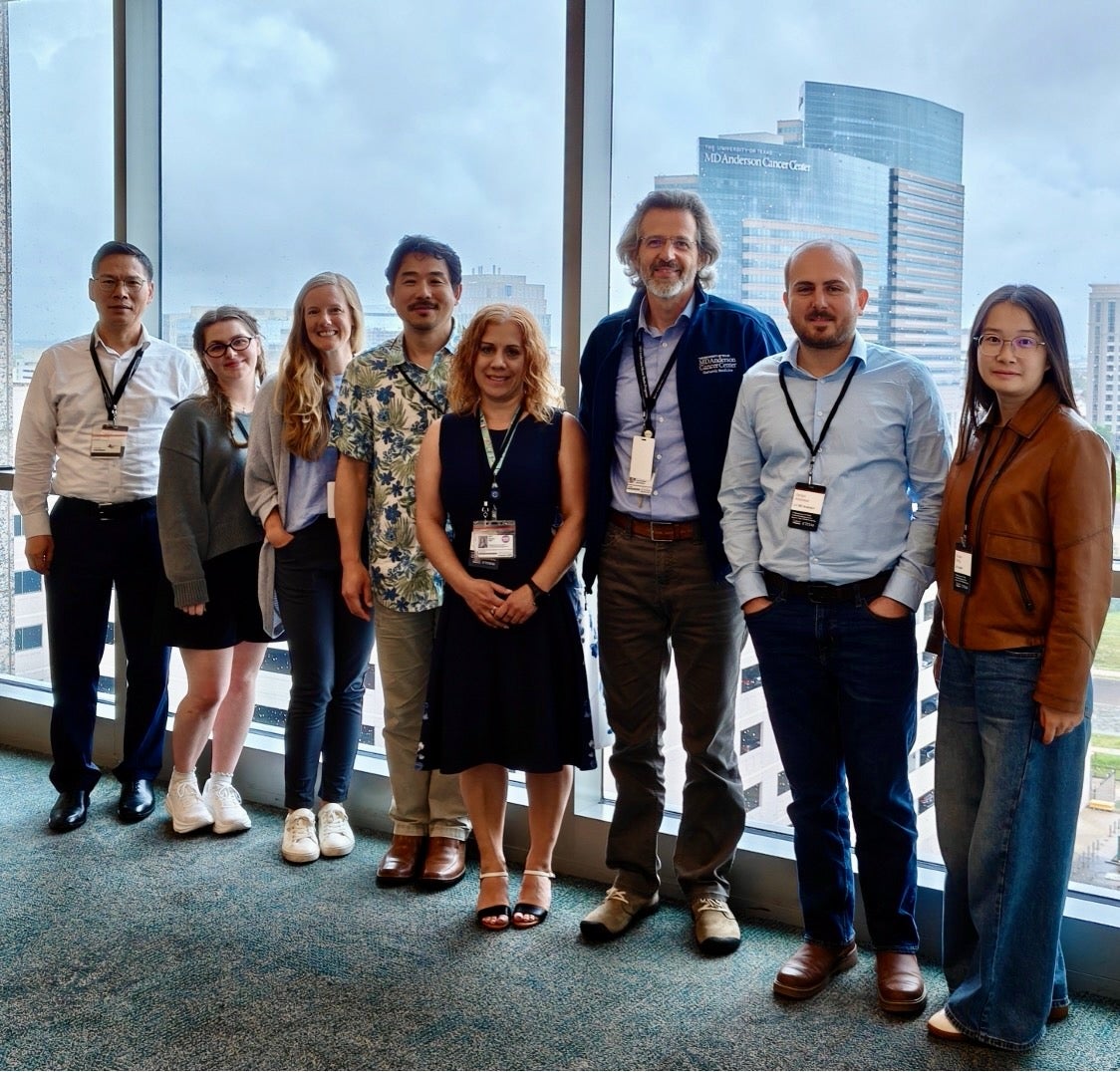
The EMPATHIC project, short for Environmental Microplastics and Systemic Pathology, Inflammation, and Carcinogenesis, is a multidisciplinary collaboration that uniquely traces the full journey of a microplastic particle from the environment into human tissue to investigate the role of microplastics in cancer development and progression. The project is supported by a Collaborative Accelerator for Transformative Research Endeavors (Accelerator) grant which funds highly integrated, complex cancer research projects with investigators from The University of Texas at Austin and The University of Texas MD Anderson Cancer Center.
Microplastics are not a single substance — they vary in size, shape, chemical composition, and the environmental contaminants they carry, making them extraordinarily difficult to study. To trace the full journey of a microplastic particle from the environment into the human body, the team combines the environmental and analytical expertise of UT Austin researchers, who identify and characterize the particles people actually encounter in food and water, with the clinical and molecular capabilities of UT MD Anderson experts, who determine where particles accumulate in tissues and whether they drive changes associated with cancer or affect how well treatments work.
Now one year into the project, the team has built the foundational tools needed to start answering those biological questions and is already seeing early signals that microplastic exposure triggers measurable changes in the body long before any visible damage appears. We met with the project's lead researchers, marine science professor Zhanfei Liu and genomic medicine associate professor and physician Andrea Viale to learn more about their approach, their early findings, and what they hope to contribute.
The Right Team for an Uncharted Problem
Q: Can you describe the EMPATHIC Project and your role in it?
Viale: The question is no longer whether we are exposed to microplastics — we know we are. Our goal is simple but ambitious, to understand whether the tiny plastic particles we are exposed to every day through food and water can affect our health and whether they contribute to cancer.
In addition to leading one of the scientific projects, I coordinate the overall direction of the EMPATHIC program. When the Collaborative Accelerator launched, I saw an opportunity to bring together experts who normally do not work in the same room — environmental biogeochemists, pathologists, imaging specialists, and cancer biologists. No single laboratory can answer this alone.
Research like this is inherently high-risk and highly interdisciplinary, making it difficult to support through traditional funding mechanisms. By investing in bold, collaborative science, our institutions have created a unique opportunity to tackle one of the most important emerging questions in environmental health.
Liu: Microplastics are found almost everywhere in our daily lives, yet we still know very little about their health consequences. Our team's role is to bridge the gap between environmental exposure and human health outcomes. We focus on understanding microplastic contamination in local waterways, food and drink sources, and in human and animal tissues, and on developing the analytical methods needed to detect and characterize these particles accurately.
Q: What expertise do you each bring to the project?
Viale: I am an oncologist by training and a cancer biologist by passion. For the past several years, my laboratory has studied how cancers begin and evolve, using sophisticated mouse models and cutting-edge genomic technologies to understand the earliest events that transform a normal cell into a cancer cell. That experience gives us a unique opportunity to ask whether long-term exposure to microplastics can change tissues in ways that make cancer more likely.
Liu: My lab group studies the sources, distribution, and transformation of organic compounds in marine and coastal environments. More recently, that focus has expanded to microplastics, which are increasingly appearing in marine environments and absorbing toxins that can be passed along to wildlife and ultimately to humans.
We study microplastics in Texas bays and estuaries using a technique called pyrolysis GC-MS, which has become one of the go-to tools for identifying and quantifying microplastics in environmental samples — including the additives and degradation products the particles carry with them, among other techniques. The analytical expertise, and our ability to detect and characterize these particles in complex real-world samples, is what we bring to the EMPATHIC project. It complements the clinical and molecular capabilities of our UT MD Anderson partners and allows us together to investigate how real-world exposures may influence disease processes.
Combining Different Approaches to Find Answers
Q: What previous work drives your approach to this project?
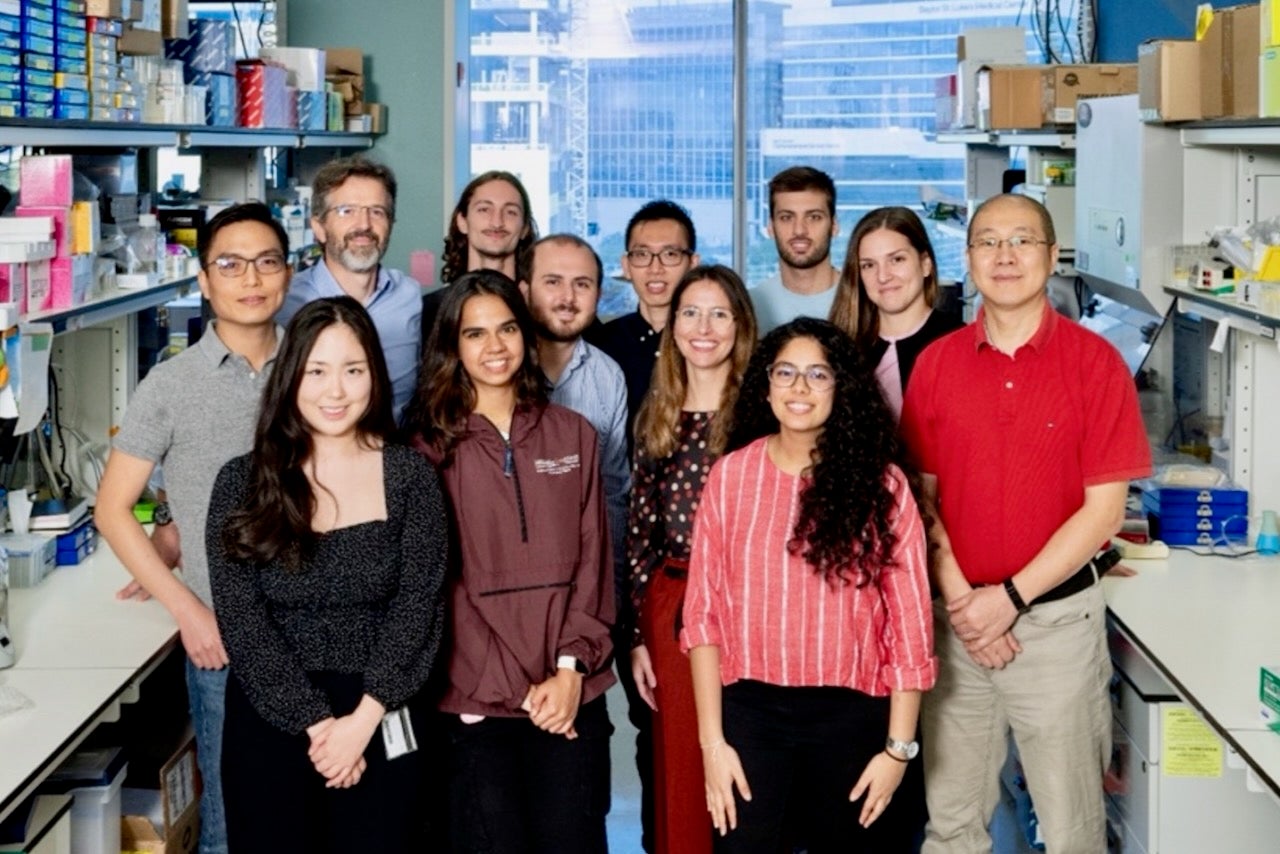
Viale: One discovery from my laboratory really changed how we think about cancer. We found that even after an injured tissue appears completely healed under the microscope, it can retain a kind of biological memory of that injury — we call this "epithelial memory." That memory helps tissues repair themselves after repeated damage, but it also makes them more vulnerable to developing cancer. A natural question followed: If tissue injury can leave behind a long-lasting molecular imprint, could exposure to microplastics do the same? That is really where this project began.
Liu: Our previous work focused on understanding how microplastics and other environmental pollutants move through ecosystems. While that research was not originally aimed at cancer, it is the foundation of our investigation into human health effects. Our method development and detection capabilities allow us to explore a new area of research that may reveal previously overlooked environmental contributors to cancer.
Q: How do you approach such a complex research problem?
Viale: At first, the question seems simple: do microplastics cause cancer? But answering it is incredibly difficult. Unlike a single chemical, microplastics are not one material — they come in different sizes, shapes, and chemical compositions, and carry many additives and environmental contaminants. Every particle can be different, which makes studying their effects extremely challenging.
That is why we built a team with expertise that spans the entire journey of a microplastic particle, from the environment to the human body. Rather than asking a single question, we are reconstructing the entire story: Where do microplastics come from? How do they enter the body? Where do they accumulate? What do they do to normal tissues? And could those tissue changes increase the risk of developing cancer?
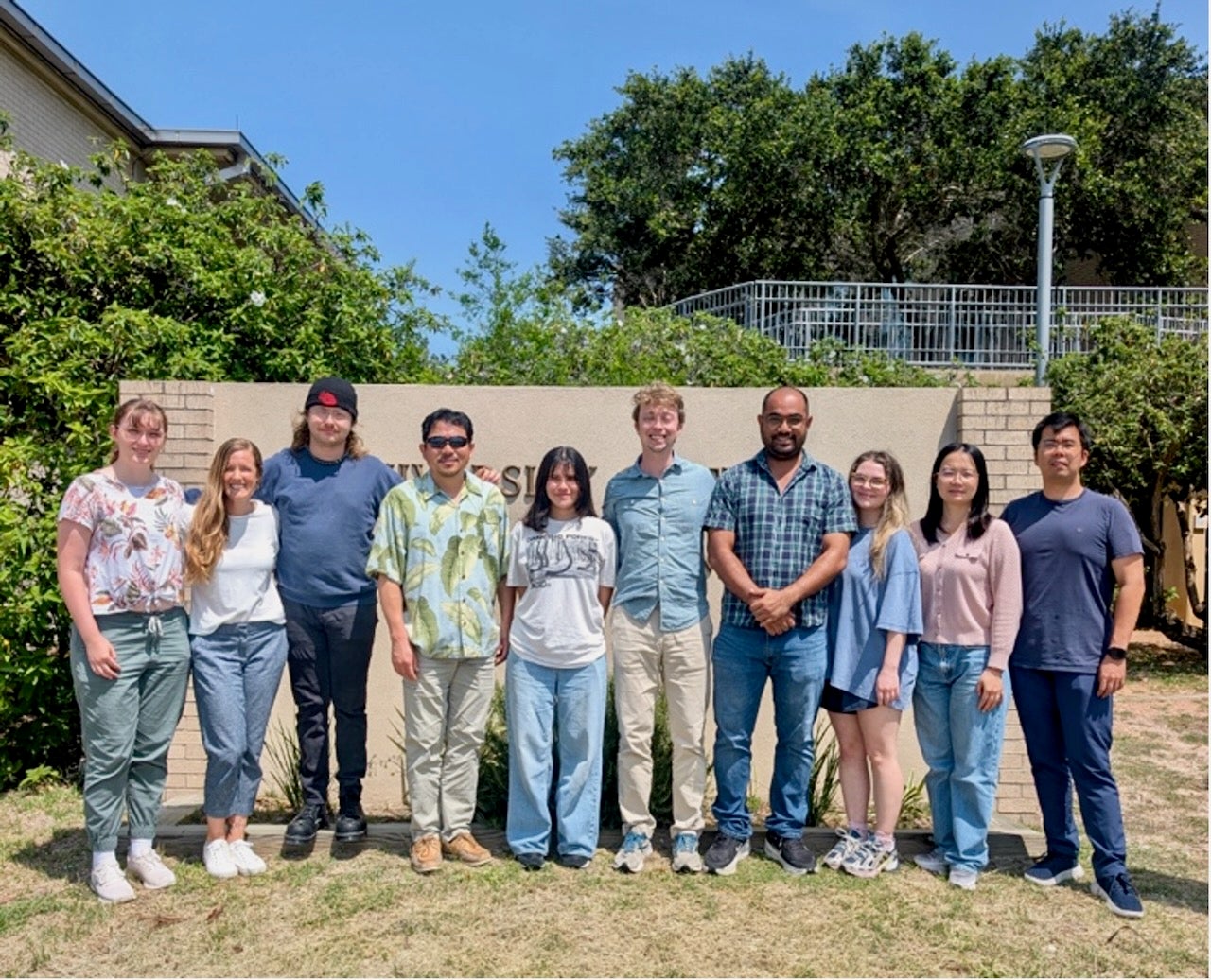
Liu: Our approach combines environmental science, analytical chemistry, and biomedical research. We first identify and characterize the microplastics people are exposed to through food and water, including how they transform through processes like sunlight exposure. We then work closely with our UT MD Anderson collaborators to examine how those particles interact with tissues, cells, and biological pathways linked to inflammation and cancer development.
Measurable Before It's Visible, and What That Could Mean for Prevention
Q: What have you accomplished in the first year?
Viale: The first year was about building the foundation. Unlike many areas of biomedical research, there are no standardized methods for detecting microplastics in biological tissues. Before we could ask whether microplastics cause disease, we first had to learn how to reliably find them.
We developed new protocols to detect different types of microplastics, established animal models that closely mimic human exposure through food and drinking water, and generated the experimental platforms we will use to study their effects on pancreatic, liver, colon, and lung cancer. It sounds like technical work, but it was essential. Without these tools, none of the biological questions could be answered.
Liu: We have also built a strong collaborative framework that enables scientists with very different expertise to work together efficiently. We developed shared workflows for sample preparation and analytical characterization between the two institutions, which is no small feat when you are bringing together fields that rarely overlap. We also quantified the amount of microplastics in the local bays and estuaries.
Q: Are there any early insights you can share?
Viale: One of the most surprising findings so far is that we are already seeing measurable biological changes in animals exposed to food-grade microplastics, even though their organs still look completely normal under the microscope.
We are observing changes in metabolism and other biochemical pathways that suggest the body is responding long before obvious tissue damage develops. That is exactly how many chronic diseases, including cancer, begin — silently. It is still too early to say that microplastics cause cancer, but these early findings tell us we are asking the right questions.
Liu: We have also learned just how important it is to study environmentally realistic exposures. Microplastics are incredibly diverse in their polymer composition, size, shape, and surface properties, and those characteristics strongly influence how particles interact with biological systems. At the same time, we have reinforced for ourselves how critical accurate measurement is — reliable data is what separates true biological findings from analytical noise.
Q: What are your greatest hopes for this research?
Viale: To determine whether long-term exposure to microplastics contributes to the rise of early-onset cancers. We are increasingly seeing tumors that were once diagnosed mainly in older adults appearing in much younger people, and environmental exposures may be part of the explanation. If we identify microplastics as a new environmental risk factor, the public health implications would be significant. Our findings could guide strategies to reduce contamination in food and water and ultimately contribute to cancer prevention.
Liu: We hope to improve methods for detecting microplastics in biological samples and generate knowledge that can guide future prevention strategies. Ideally, our work will help identify environmental risk factors and contribute to reducing the burden of any human health problems caused by microplastics. We are optimistic that the knowledge generated here will have impacts far beyond this project itself — helping to improve contamination prevention and overall human health.