

Eleven faculty members from The University of Texas at Austin have been selected by the National Science Foundation to receive Faculty Early Career Development Program (CAREER) Awards.
Among NSF's highest honors for junior faculty, a CAREER award provides up to five years of funding to support exceptional researchers who exemplify excellence in both scholarship and teaching while driving innovation in their fields.
UT recipients for fiscal year 2025 include:
Cockrell School of Engineering
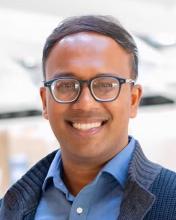
Shwetadwip Chowdhury, assistant professor, Chandra Department of Electrical Engineering, is researching deep-tissue optical imaging via inverse-scattering and will specifically focus on developing imaging pipelines to achieve computational scatter-correction in real-world biological samples. Learn more
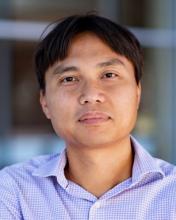
Thinh Doan, assistant professor, Aerospace Engineering and Engineering Mechanics, aims to create new AI methods that help teams of robots and software agents learn to cooperate in real time more efficiently and reliably, enabling practical uses like wildfire monitoring, search-and-rescue, and manufacturing even under difficult and changing conditions and limited communication.
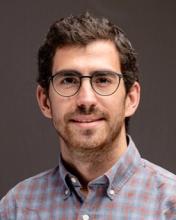
Berkin Dortdivanlioglu, assistant professor, Maseeh Department of Civil, Architectural and Environmental Engineering, is working to advance understanding of stretchable soft materials and their ability to generate electricity when bent or stretched, potentially enabling biocompatible and sustainable applications such as self-powered wearables, implants, soft robotics and conformal sensors.
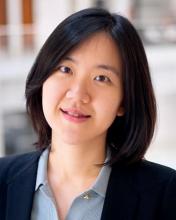
Hyeji Kim, assistant professor, Chandra Department of Electrical Engineering, will use the NSF to establish frameworks that integrate information theory and learning to develop new compression and communication algorithms. Learn more
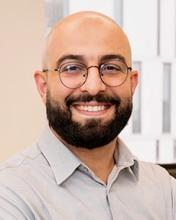
Javad Mohammadi, assistant professor, Maseeh Department of Civil, Architectural and Environmental Engineering, will use the funding to advance the autonomy of power grids by developing the fundamental theory for enhancing decision speed, resilience, and societal and sustainability awareness of distributed grid management models and algorithms.
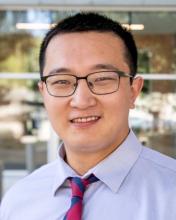
Jin Yang, an assistant professor, Aerospace Engineering and Engineering Mechanics, will use the funding to investigate fracture propagation – the formation of cracks or fractures – in soft viscoelastic materials, such as polymers, hydrogels and biological tissues. These materials are used in a wide variety of engineering and biomedical applications including laser eye surgery, breaking up kidney stones, drug delivery and traumatic brain injury prevention. Learn more
College of Liberal Arts
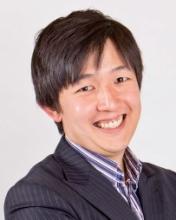
Desmond Ong, assistant professor of psychology, received funding to advance research on social and affective cognition in artificial intelligence systems. Specifically, his research will develop scientific benchmarks needed to measure emotional reasoning in AI. Learn more
College of Natural Sciences
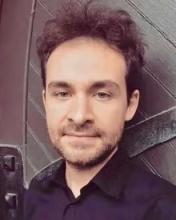
Edoardo Baldini, assistant professor of physics, will examine extremely thin materials called van der Waals magnets and develop strategies to manipulate the properties and energy transport of their electronic excitations. This research leverages the synergistic interplay of magnetic and optical behaviors of atomically thin materials to enable innovative applications in quantum devices, energy-efficient nanophotonics and information processing. Learn more
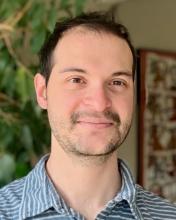
William Gilpin, assistant professor of physics, aims to connect modern machine learning approaches to the classical physics of nonlinear systems. His research will develop machine learning algorithms that search for statistical descriptions and apply tools to diverse time series datasets arising in neuroscience, organismal behavior and gene expression. Learn more
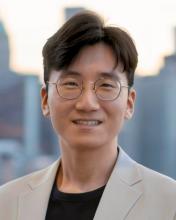
Daehyeok Kim, assistant professor of computer science, will use the funding to support the development of NicOS, a new operating system for programmable network interface cards (NICs). These NICs are becoming increasingly critical in cloud data centers, especially for AI infrastructure, as they are essential for moving data across servers in data-intensive applications like AI model training and data analytics. Learn more
Jackson School of Geosciences
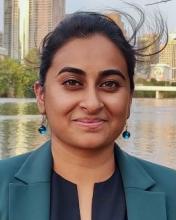
Geeta G Persad, assistant professor, will work on understanding how some of the same aerosol pollutants that produce smog contribute to climate risks such as extreme temperature, rainfall and humidity, particularly when they occur at the same time. Learn more