

A Q&A with Lena Suk, OVPR’s Associate Director of Investigator Skill-Building and Newly Published Book Author

At OVPR, many members of the Research Development (RD) team bring firsthand experience as scholars — writing, publishing and navigating the same processes they now help UT researchers through. For Lena Suk, that experience is still ongoing. Alongside her work supporting investigators, the former history professor recently published her first book.
We asked Suk about that book, how her academic background shapes her work today and what she likes to do when she’s not conducting or supporting research.
What does your role entail as associate director of investigator skill-building? How long have you been in that position?
I’ve been in this role since August 2023, and it’s been a great (almost) three years. As associate director of investigator skill-building (ISB), I design curricula, lead workshops and host learning experiences for UT principal investigators (PIs) to work on their research proposal development skills.
Every day is different. One day I might be facilitating a writing workshop and counseling PIs on how to pitch their research; another day I might be connecting researchers to key support services on campus or setting up consultations with program officers at external funding agencies.
What brought you to UT Austin, and how long have you been here? Have you ever worked in any other schools or departments?
I can’t believe it, but it’ll be eight years in October. I worked in Texas Global and the Center for Teaching and Learning before coming to OVPR. Each unit I’ve been in has represented a different piece of my professional and scholarly interests — research, international collaboration and teaching/learning.
Before I came to UT, I was an assistant professor of Latin American history at the University of Louisiana at Lafayette. My research revolves around gender and popular culture in Brazil, and I taught classes on history, gender, race and media in Latin America. It was a big decision to leave my faculty role behind after five years at UL, but I’ve had the opportunity to work on so many cool projects at UT, especially within OVPR. My partner finding a job in Austin was the primary driver for the move, but I’m much happier in a staff support role that still draws upon my experience as a researcher and teacher.
What is your favorite thing about your job? Anything that still surprises you?
I really enjoy supporting UT PIs articulate the importance of their research. Research proposals are their own genre of writing, and I like breaking down the key elements so that researchers have clear and actionable paths to move their grants forward. I also love to hear about UT researchers’ current work in different disciplines and what they’re hoping to accomplish.
Another thing I enjoy is the remarkable opportunity that each workshop or ISB event presents — a room full of smart people from multiple disciplines, talking about their work and their goals. That’s why I try to facilitate discussion and group activities in workshops, because the opportunity for UT researchers to learn from each other is invaluable. It’s always fun and surprising when people meet each other and strike up new research connections.
I see that you majored in English as an undergrad, then earned a master’s in film and a Ph.D. in history. That’s quite a trajectory! How did that evolve?
Yes, I did my Ph.D. in Latin American history at Emory University in Atlanta but did film studies and English/cultural studies before that. My research is interdisciplinary, so I use perspectives and methods from these fields and more.
I know you recently published a book. Congratulations! Tell us more about that.
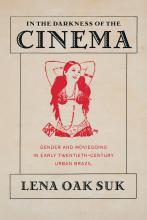
Yes, thank you! “In the Darkness of the Cinema” (University of Pittsburgh Press, 2026) is my first book. It’s a scholarly monograph that examines moviegoing practices in early 20th-century Brazil. How and why people went to the movies might seem random, but I use cinema as a lens to examine ideologies and practices related to gender and sexual morality in the 1920s and other moments of significant social change. A key theme I explore is how movie theaters were an avenue for young women to participate in urban leisure culture, to experiment with new styles and forms of consumption, and how these practices transformed the urban environment in Brazil.
I’m currently embarking on a new research project on the reception and practices surrounding Korean popular culture in Brazil. It’s a contemporary project that is more ethnographic than my previous archival work, and a fun way to connect my interests in Korean pop culture and Brazil.
My research is not a part of my current role, but being a researcher has given me firsthand experience in the process and skills that are important in research proposal development. I know how hard it is to put your ideas out there and hit “submit,” how stressful the grant submission process can be and how lonely writing can be too.
One of the workshops I offer, Assessing Feedback on Your Grant Proposal, is informed directly by my experience working through reader reviews on my initial book manuscript — it’s tough to process criticisms on something you’ve worked hard on. But there’s also a practical and systematic way of doing this, so that’s what I try to share in that workshop.
What do you like to do in your free time?
Hike, read, watch movies and K-dramas, cook and take my three kids on little adventures around Austin (free or cheap, if possible!). I try to utilize UT family/community perks too, like bowling in the Texas Union and visiting campus museums and libraries.
My favorite place on campus is probably the pavilion area surrounding the LBJ Library near the Benson. It has an open area with little wildflower gardens and native plants. We used to take the kids there during the pandemic lockdown. It would be empty and a little spooky but also pretty and relaxing.
And now for a few more important questions…
If you could time-travel, would you choose to go to the past or the future? “When” would you go?
Definitely the future, because why not? I guess I’d program “near pre-apocalyptic future” into the time machine. Hopefully that’s not… the present?
If you had to eat one meal for the rest of your life, what would it be and why?
That’s reallllly tough, but I would cheat and claim Korean BBQ because that could mean several different entrees (variety of meats and lettuce/fresh veggies, possibly followed by cold noodles and/or fried rice) and unlimited kimchi and Korean side dishes.