Research that's Changing the World
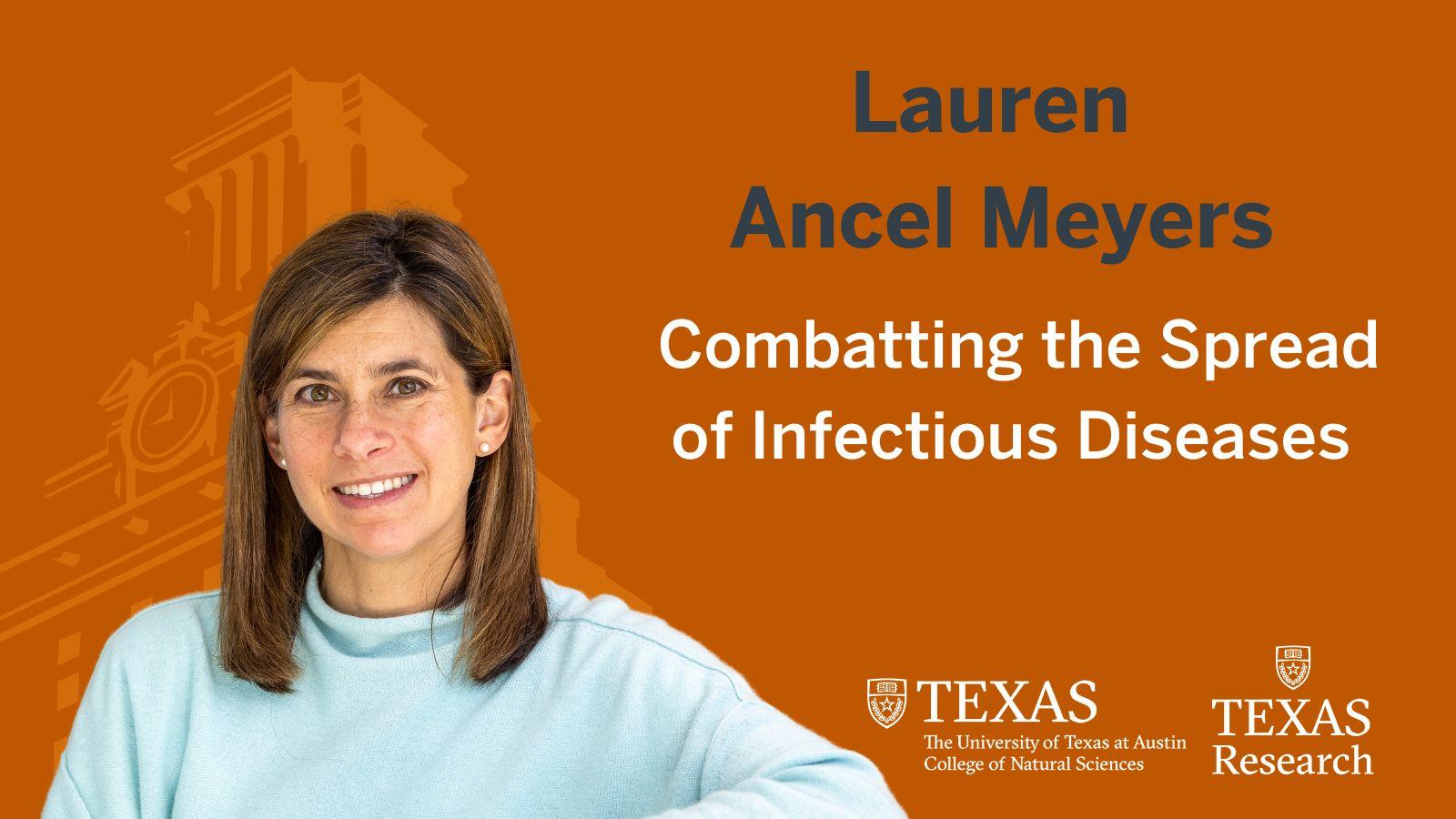
Lauren Ancel Meyers has advised the World Health Organization, the Centers for Disease Control, and policymakers worldwide on strategies to contain disease outbreaks. Selected by the CDC to help lead the first nationwide outbreak response and modeling network, she is working to ensure that public health agencies around the US are equipped with advanced analytics to detect, forecast, and control future pandemics.
What Starts Here
An internationally renowned epidemiologist and data scientist, Meyers holds the Denton A. Cooley Centennial Professor at UT Austin. Since joining the university in 2003, she has served as the founding chair of the Department of Statistics and Data Sciences, co-chaired UT’s strategic planning initiative, and led the UT COVID-19 Modeling Consortium, which played a pivotal role in global pandemic response efforts. As the director of UT’s Center for Pandemic Decision Science, she recently secured a $30 million grant from the CDC to develop next-generation models for managing future pandemics. Dr. Meyers continues to push the frontiers of pandemic research, using machine learning and high-performance computing to bolster global preparedness for deadly outbreaks.
Beyond the Forty Acres
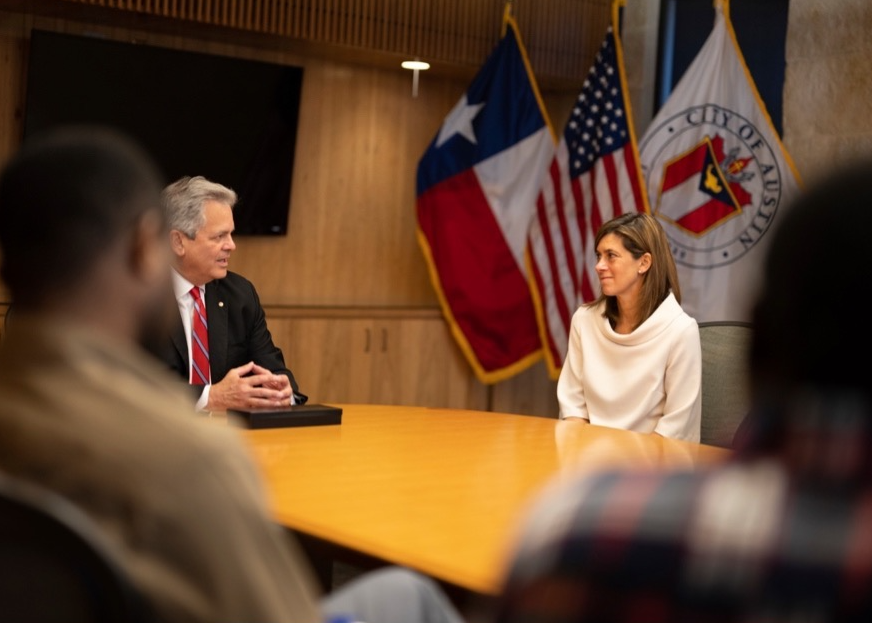
During the COVID pandemic, Meyers and her team worked tirelessly to provide essential forecasts and guidance to cities and states across the US. In Austin, they helped city leaders create the color-coded COVID alert system, which protected the local hospital system for over two years. Meyers continues to provide national strategic guidance as chair of the CDC Board of Scientific Advisors and as a member of the Harvard University Board of Overseers.
Steve Adler, former Austin Mayor: "Dr. Meyers’ research substantially helped save many hundreds of lives in Travis County and beyond during the pandemic... COVID-19 mortality rates in Austin were far below (about half of) Texas as a whole and the country. And, our staged alert system allowed us to keep our schools and workplaces more open compared to many cities."