Research that's Changing the World
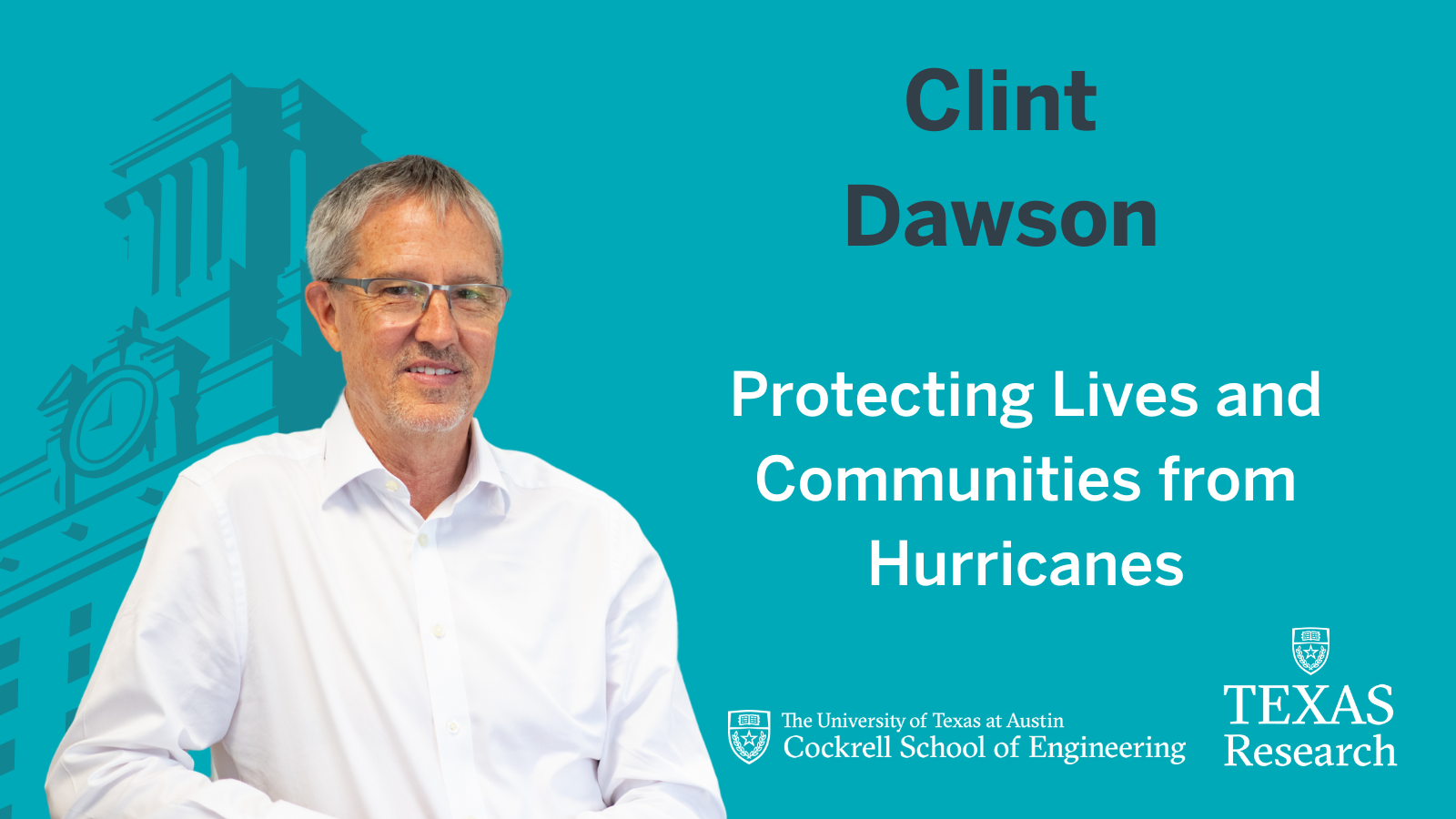
Clint Dawson, a computational engineer, was instrumental in developing a simulation code that is used worldwide in coastal ocean modeling and hurricane storm surge predictions. This helps state and local government leaders know whether to evacuate neighborhoods and where to stage resources, saving lives and property. Dawson works closely with emergency response organizations across the state, and his research has influenced the action plans for major storms that have hit Texas and Louisiana since 2005. Having access to the high-performance computing power at UT’s Texas Advanced Computing Center has been critical to the success of his research.
What Starts Here
Clint Dawson joined UT in 1995 and is the director of the Computational Hydraulics Group at the Oden Institute, chair of the Department of Aerospace Engineering and Engineering Mechanics and the Cockrell Family Regents Chair in Engineering #2 at the Cockrell School of Engineering. He has authored or co-authored over 200 technical articles in the areas of numerical analysis, numerical methods and parallel computing. He has received national recognition for his research and was the recipient of the 2024 President’s Research Impact Award.
Beyond the Forty Acres
Jim Blackburn, co-director of the Severe Storm Prediction, Education and Evacuation from Disaster Center, Rice University: "The work Clint is engaged in with the SSPEED Center here in Houston is about potentially preventing the worst environmental disaster in United States history and saving the lives of thousands of coastal residents. The ability to predict the surge arising from storms coming ashore at different locations and from different directions at different magnitudes is critical to understanding both the need for action and what type of action to design."