

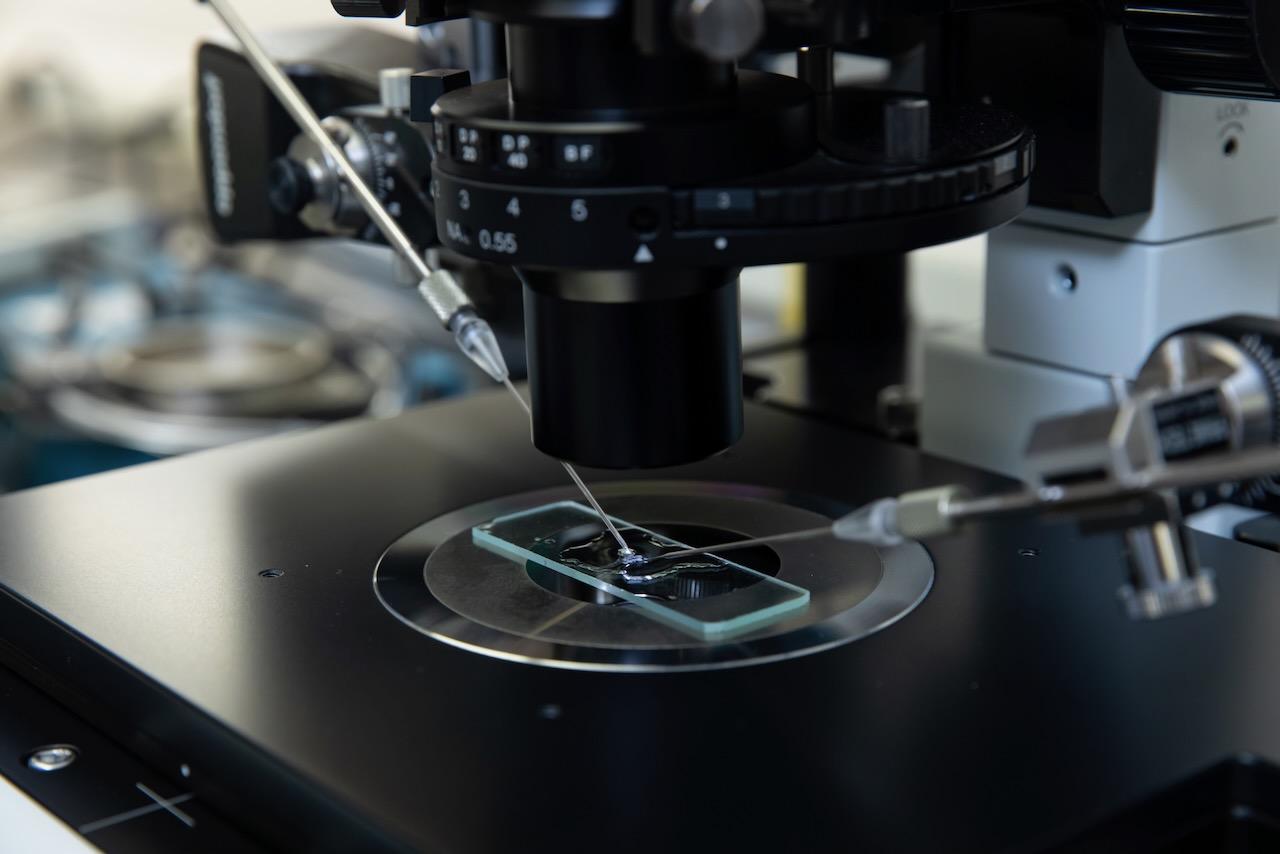
The Mouse Genetic Engineering Facility (MGEF) provides advanced services for creating and analyzing genetically engineered mouse models. It supports cross-disciplinary research through expertise, training, and collaborations that advance discoveries in human health and disease.
Getting Started
Step 1: Review Available Services
Explore the range of genetic engineering, cryopreservation, and breeding services offered by MGEF to identify the best fit for your research.
Step 2: Discuss Your Project with MGEF
Before initiating work, contact the Facility Director to review project goals, timelines, and requirements.
Step 3: Prepare Required Materials
Depending on the service selected, you may need to provide CRISPR reagents, mouse breeders, or additional experimental information.
Acknowledgment of Core Services and Equipment
Please acknowledge the use of our core services and equipment in your publications. Proper citation directly impacts funding for our facility.
RRID: SCR_021927
Services
The Mouse Genetic Engineering Facility (MGEF) provides end-to-end support for generating, maintaining, and archiving genetically engineered mouse models. Services span CRISPR model creation, embryo manipulation, stem-cell–based approaches, cryopreservation, and breeding strategies designed to keep research lines healthy, reproducible, and accessible long-term.
Contact the Facility Director for consultation or to schedule your required services.
CRISPR Model Generation
MGEF offers two approaches depending on investigator needs:
Full Model Package
A turnkey option where the facility manages the entire CRISPR workflow—from allele design and reagent preparation to microinjection, founder screening, N1 breeding, off-target analysis, and initial colony expansion. Sperm cryopreservation of the N2 generation and development of an automated genotyping strategy (in partnership with Transnetyx) are included.
Microinjection-Only Option
For labs that prefer to design and supply their own CRISPR reagents, MGEF will prepare and microinject (or electroporate) embryos using investigator-provided gRNAs and donor templates. Guidance is available for design, recommended vendors, and reagent preparation.
What to Expect
Editing efficiency varies, especially for HDR projects. Additional rounds of injection may be recommended. If an edit appears embryonic lethal, the facility will meet with investigators to review data and determine next steps. Billing occurs after each completed stage of the model package.
Cryopreservation & Recovery Services
MGEF provides reliable, cost-effective options for archiving and reviving mouse lines:
Sperm Cryopreservation
Ideal for safeguarding lines, meeting sharing requirements, or reducing colony size. Sperm from two proven breeder males is frozen into 20 straws with a test straw used for an IVF quality-control assay. Investigators should wait for QC results before removing a line from the rack.
Embryo Cryopreservation
Embryo cryopreservation is recommended for mouse lines carrying multiple mutant alleles or those maintained on unique genetic backgrounds.
Recovery
The MGEF recovers mouse lines from frozen sperm via in vitro fertilization (IVF). Frozen embryos are thawed following the provider’s specifications and transferred to recipient females for development to term.
Storage
Long-term storage is available onsite in duplicate liquid nitrogen tanks, with additional off-site backup maintained at Cryogene in San Antonio.
Breeding & Colony Support
To ensure genetic integrity and reproducibility, MGEF provides:
- Establishment of congenic lines
- Refreshing of mouse lines to mitigate genetic drift
- Breeding of founders and N1 generation animals
- Support for generating embryonic stem cell lines for organoid, -omics, and drug-screening applications
Specialized Embryo & Stem Cell Work
The facility provides embryo collection, manipulation, and processing services to support -omics workflows, imaging projects, and downstream molecular analysis. MGEF also derives embryonic stem cell lines from mutant mice for advanced experimental applications.
Additional Resources
Explore these online tools and databases to support your research in mouse genetics and genomics. From locating specific mouse strains to designing CRISPR guides and visualizing genomic data, these resources provide essential information and services for advancing your work.
International Mouse Strain Resource (IMSR)
Search global repositories for existing mouse strains, cryopreserved sperm, embryos, and ES cell clones.
Mutant Mouse Resource and Research Centers (MMRRC)
NIH-supported repositories offering mutant and genetically engineered mouse lines, plus distribution and validation services.
Mouse Genome Informatics (MGI)
Comprehensive gene, allele, and phenotype database for planning and interpreting mouse genetics studies.
Jackson Laboratory Cre Portal
Find Cre-driver lines with tissue-specific or developmental expression patterns.
CRISPOR
Design CRISPR/Cas9 guides and evaluate predicted on- and off-target effects.
Ensembl
Browse annotated vertebrate genomes, gene models, variants, and comparative genomics data.
University of California Santa Cruz Genome Browser
Visualize genomic regions, load custom tracks, and run tools like in-silico PCR.
Fees
Fees are subject to change. Other higher education/state agencies and for-profit organizations may contact the MGEF for pricing. CRISPR transgenics are only available to UT Austin labs.
| Service | Fee |
|---|---|
| Microinjection/Electroporation | $3,165 per day |
| Sperm cryopreservation | $1,076 per line |
| Embryo cryopreservation | $1,926 per session |
| Long-term storage of sperm/embryos | $89 per year for each line |
| In vitro fertilization | $2,679 per experiment |
| Embryo cryorecovery | $2,162 per line |
| Labor | $120 per hour |
The listed fees do not include Animal Resources Center per diem charges, if applicable.
Staff
William Shawlot, Ph.D. – Director

Bill Shawlot received his Ph.D. from the Baylor College of Medicine, completed post-doctoral training under Richard Behringer at the M.D. Anderson Cancer Center, and was an Assistant Professor in the Department of Genetics, Cell Biology and Development at the University of Minnesota before joining the Texas A&M Institute for Genomic Medicine (TIGM). There he led TIGM’s efforts in knockout mouse production in the International Knockout Mouse Consortium program. He has more than 25 years of experience in the transgenic mouse field and his research focuses on the developmental biology of birth defects.
Email: wshawlot@austin.utexas.edu
Phone: 512-471-3918
Office: ARC 1.218
Jin Xiang Ren, M.D, M.S. – Research Engineering/Scientist Professional
Jin Xiang trained with Tim Townes at the University of Alabama at Birmingham. She has more than 20 years of experience in microinjection and cryopreservation.
Email: jinxren1041@utexas.edu
Phone: 512-475-7843
Office: ARC 1.218