The Biomedical Research Computing Facility (BRCF) provides reliable, standardized hardware, software, and storage infrastructure tailored for local research computing. The facility’s streamlined “POD” architecture makes it easy to manage resources efficiently so that researchers can focus on advancing their work.
Quick Links
Services
The BRCF facility provides specialized research computing workflow support for the biomedical community that complements the Texas Advanced Computing Center’s (TACC) supercomputing resources. Visit the Facility Wiki to learn more.
Research Computing Workflow Support
High-density Storage + Compute PODs
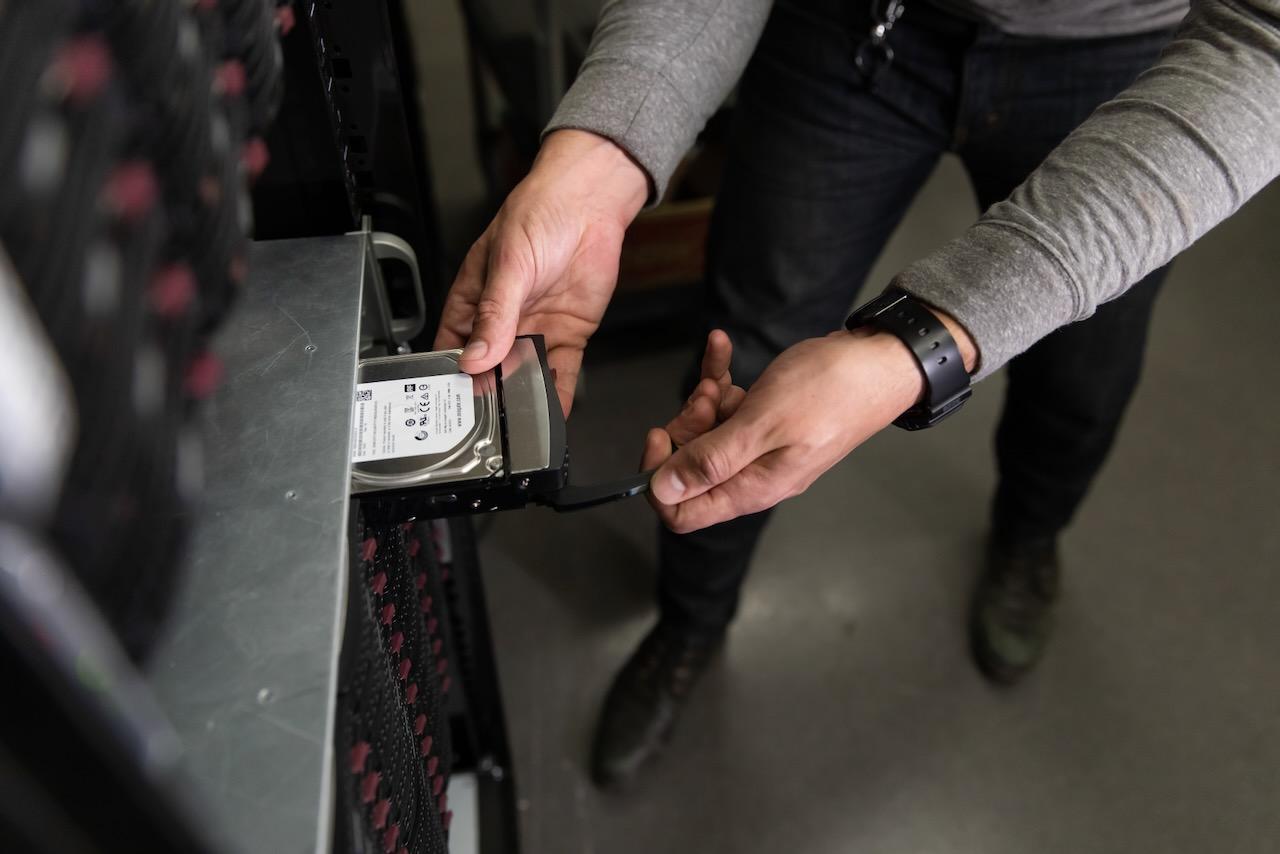
Each POD consists of one or more compute servers connecting to a shared high-density storage server with more than 95 TB of usable storage managed by the high-integrity ZFS file system. Home, Work and Scratch areas are accessible from any compute server and from user computers via the Samba network file system.
- POD Resources and Access
- For more information, contact rctf-support@utexas.edu.
Extensive Bioinformatics Software in Non-Batch Environment
All compute servers have an extensive suite of Bioinformatics packages available in an interactive, non-batch environment, including web-based tools such as R Studio and JupyterHub Servers. And we work with members to provision additional software as needed. Importantly, there is no batch system; this lets users perform long-running jobs not supported at TACC.
Data Management Services
A major goal is to help members organize and manage research data in accordance with granting agency requirements. We work with new participants to consolidate and organize data from disparate locations onto POD storage. Backups are then performed weekly to spinning disk at the UT data center, and data is archived periodically to the Ranch tape system at Texas Advanced Computing Center (TACC).
Responsive, Biological Sciences-focused Computing Support
Our support team consists of both biomedical sciences staff and individuals from the College of Natural Sciences IT office. The combination allows us both to understand member needs and to centrally manage and monitor these systems efficiently. We also work closely with members to accommodate emerging needs. For example, based on community feedback we implemented automated data backups for instrument-associated Windows computers.
The BRCF offers two participation models:
POD Equipment Ownership
Participating groups purchase POD hardware using their own funding sources. BRCF then charges a monthly fee covering backup equipment, staffing, hosting, system administration, and spare parts.
The Rental POD
A lab can request access to our Rental POD, which does not require equipment purchase but charges a higher monthly maintenance fee based on desired disk storage.
See How to participate in BRCF pods fir more information.
Learning Opportunities
As modern biology becomes increasingly data-driven, computational and bioinformatic skills are now essential tools for every biologist. In conjunction with the Bioinformatics Consulting Group, we equip the UT research community with the training and computing infrastructure they need to confidently design, analyze, and interpret complex, large-scale experiments. Educational resources include:
Summer School for Big Data in Biology
The Summer School offers intensive four- or five-day workshops on diverse topics for analysis of large-scale DNA, RNA, and protein datasets.
Short Courses
Each long semester, the CBRS offers a variety of short courses in diverse topics for learning computational approaches to biological problems.
Freshman Research Initiative – Big Data in Biology
UT’s Freshman Research Initiative Computational Biology Stream – Big Data in Biology seeks to enrich and engage undergraduate students in new and advanced computational technologies for research in the life sciences. See the Course Wiki for course materials, syllabus and announcements.
Bioinformatics Team
The UT Bioinformatics (BioI) Team provides "one-stop" unified support for bioinformatics. See Bioinformatics Team Home for more information.
Staff
Anna Battenhouse – Facility Manager
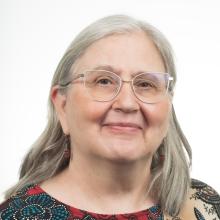
Anna Battenhouse is a research scientist in the lab of professor Edward Marcotte, is a member of the Bioinformatics Consulting Group, and leads the Biomedical Research Computing Facility in support of the IT and computational needs of the biomedical research community at UT Austin. She has extensive experience working with Next Generation Sequencing (NGS) data and teaches the Introduction to NGS Tools course in the Big Data in Biology Summer School as well as several CBRS short courses.
Battenhouse received a B.A. in English Literature from Carleton College in 1978. After a 25-year career in commercial software development, she began her "retirement career" in the functional genomics lab of Vishwanath Iyer, and obtained a B.S. in Biochemistry from UT Austin in 2013.
Email: abattenhouse@utexas.edu
Office: MBB 3.106
Marci Coleman - Senior Systems Administrator
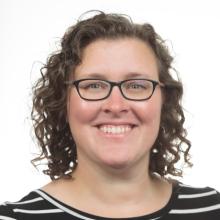
Marci has a BS in Physics and Computer Science from Trinity University, and went on to get a master's degree in Astronomy and Astrophysics from Johns Hopkins University.
She started her system administrator career in the Astronomy Department at UT before moving to Center for Systems and Synthetic Biology (one of the precursors to the BRCF), and then to the School of Information. She returned to the BRCF in 2021.
Email: marci.coleman@austin.utexas.edu
Office: MBB 3.106